Fiber cement offers a heavier, more impact-resistant panel than vinyl, with a paintable surface for an exact color match.
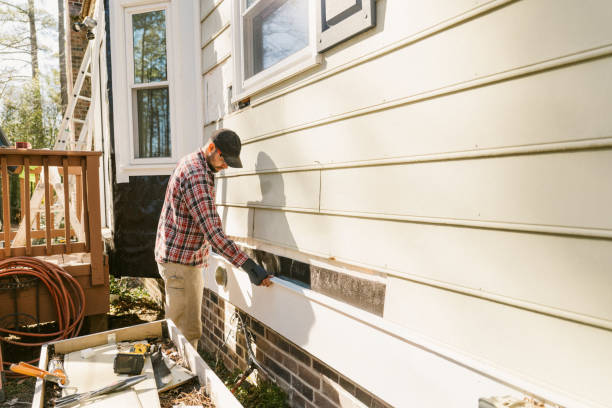
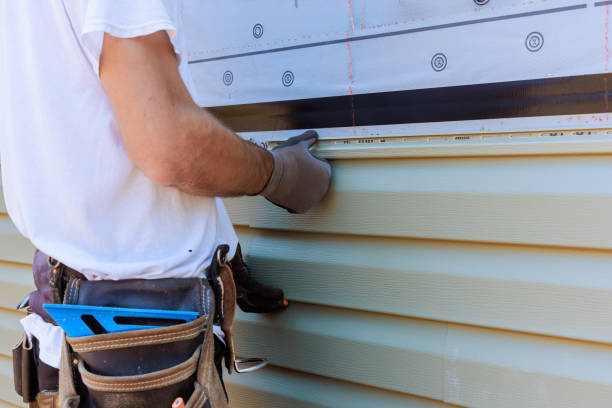
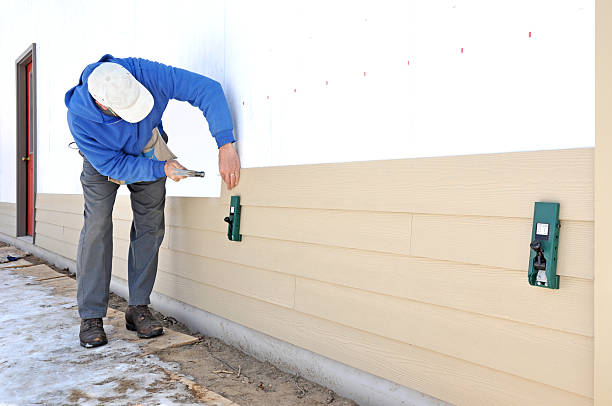
Our saws use vacuum shrouds to control silica dust, a real jobsite hazard when cutting fiber cement dry.
Crews are certified on HardieZone requirements and manufacturer-approved fastening patterns, not general siding methods.
Certification gets renewed on a regular cycle, and we can show proof of current standing on request.
Fiber cement is heavier and requires precise handling — our crews are trained specifically for this material.
We carry the liability coverage appropriate for heavier-material installation work.
Cracked or impact-damaged fiber cement panels get prioritized quickly, especially after hail events.
New installation estimates are typically scheduled within the same week.
Fiber cement costs more upfront than vinyl, and your estimate reflects material and labor separately so the trade-off is clear.
Repairs are priced by scope, not bundled into a bigger sales pitch.
Fiber cement's durability depends heavily on correct cutting, fastening, and edge sealing during install.

Corrosion-resistant fasteners are used throughout, since standard fasteners can react poorly with cement-based material. Fastener heads get set flush, not overdriven, which is a common mistake that cracks the panel around the nail.
We check fastener condition on surrounding panels during any repair visit. We test-fit a replacement panel dry before final fastening to confirm the color batch reads correctly in daylight.
Trim boards get installed with the same fastening discipline as field panels, with primed edges sealed at every cut. Trim reveal depth is checked against the panel butt joints so shadow lines stay consistent.
Fiber cement's paintable surface allows a full color change without replacing panels, when the surface is still sound. A 100% acrylic exterior formulation is used, matched to fiber cement manufacturer paint guidelines.
Impact damage documentation is provided in a format suited for insurance claims. A simple tap test alongside visual inspection can reveal cracking that hasn't fully separated yet.
Older fiber cement installs sometimes used incorrect fasteners — we identify and correct this during repair or re-side work. Older galvanized fasteners sometimes corrode faster than the fiber cement around them — we swap to stainless or coated fasteners on repairs.

We'll ask about panel age and any visible cracking to gauge scope before scheduling.
A certified estimator or technician arrives to inspect panels, fasteners, and edge sealing.
Insurance-relevant damage gets documented with photos as part of the assessment.
Workmanship on fiber cement work is guaranteed the same as any material we install.

Hail damage assessment found cracking we couldn't see ourselves, which helped the insurance claim go smoother.
Repainted our aging fiber cement instead of replacing it and it looks brand new for a fraction of the cost.
They used a vacuum saw for every cut, which I appreciated with kids playing nearby during the install.
Fiber cement held up through a bad hail season better than our neighbor's vinyl did.
Call now for a free estimate on fiber cement installation, repair, or a color refresh.
Call +1-844-782-0929Certified crews are dispatched locally — call to confirm coverage at your address.